Moira Fortin Cornejo & Antonie Alm, University of Otago, New Zealand
Abstract
This article follows an earlier reflection on an advising session structured around the Wheel of Language Learning (WLL) (Alm & Fortin, 2024) by tracing what happened when those intentions were taken into an intensive period of French language study in France. The article draws on a series of blog posts written over two months, treated as performed autoethnographic reflections on learning within and beyond the classroom. The analysis shows how an initial, WLL-informed reflective routine expanded into a wider exploration of affect, time, and identity, as the first author engaged in everyday interaction, humour and performance, and a high-stakes professional presentation in French. In these posts, reflective practice emerges as both structured and adaptive: the WLL provides an entry point for intentional reflection and strategic awareness, while situated practice generates new metaphors, strategies, and forms of self-understanding. The article argues that reflective practice is an ongoing context-sensitive process through which learner autonomy is negotiated over time rather than achieved once, with the WLL serving as an initial scaffold for that process.
Keywords: reflective practice; language learning; learner autonomy; Wheel of Language Learning; immersion learning; identity and language; self-regulated learning
In a previous article, Spinning the Wheel of Reflection: Facilitating Language Learning Insights through Advising (Alm & Fortin, 2024), the Wheel of Language Learning (WLL) was used in an advising session to help the first author identify goals, strategies, and emotional factors shaping her French learning plans prior to travelling to France (Figure 1). The advising process visually mapped several interconnected themes that later became central to the experiences documented in this article. Together, these themes positioned the WLL not simply as a planning exercise, but as a reflective advising tool that shaped the learner’s approach to autonomy, identity, and participation throughout her time in France. The present article revisits that advising moment retrospectively, examining how those intentions unfolded in practice during two months of full-immersion French language study in Marseille.
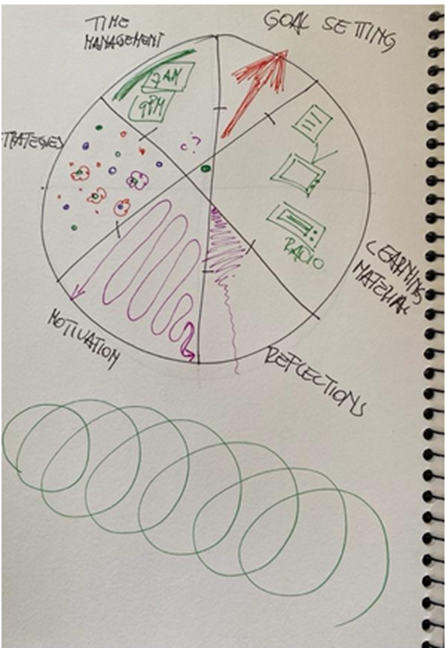
Figure 1. Moira’s Initial Wheel of Language Learning (Alm & Fortin, 2024, p 88.).
What began as a plan to implement the WLL in a practical, personal context gradually expanded into a deeper inquiry into the affective, temporal, and identity-related dimensions of language learning, dimensions that are often acknowledged in theory but less frequently explored through first-person accounts.
The experience of immersion revealed that reflective practice is not only the application of a predetermined tool but a dynamic, evolving process. As the first author enacted the strategies initially identified through the WLL, new metaphors, unexpected challenges, and alternative practices emerged. These experiences resonated with broader theoretical perspectives on learner autonomy, affect in language learning, identity-based approaches, and self-regulated learning (Benson, 2007; Oxford, 2016; Ushioda, 2011). In what follows, learner autonomy functions as the organising frame, with affect, identity, and temporality offering interpretive lenses for understanding how autonomy was experienced, negotiated, and enacted whilst in Marseille.
This article weaves together these understandings to show how structured reflective tools, such as the WLL, can open into more expansive forms of inquiry when engaged through immersive experiences. In line with the WLL’s emphasis on autonomy, adaptability, and practical application, the following pages highlight both the theoretical and experiential dimensions of reflection, attending to the frustrations, joys, and small breakthroughs that shape the continuous process of (re) becoming a learner.
Background and Learning Context
The first author, Moira Fortin Cornejo, is a Chilean-born scholar and theatre practitioner currently based in Aotearoa New Zealand. Her linguistic trajectory includes Spanish as a first language, German acquired through bilingual schooling, and English developed during migration and academic work. French represents a more recent language project motivated by both personal and professional interests.
The period discussed in this article took place during a Research and Study Leave between June and October in 2024, when the first author studied French at the Alliance Française (Level A2) in Marseille while living with a French host. Alongside formal classes, she engaged in everyday interactions, cultural activities, and professional networking. These experiences were documented across ten blog entries, titled Becoming Sophie (2024). These posts documented not only linguistic development but also the affective, performative, and identity-related dimensions of immersion learning as they unfolded in everyday life, which are examined here through a performed autoethnographic lens. While the reflections are written from the perspective of the first author, the analysis stems from a prior advising session structured around the WLL, conducted with the second author, Antonie Alm. She also participated in subsequent discussions during the analysis and revision of the manuscript, helping to connect the reflective narrative to broader scholarship on learner autonomy, advising, and technology-mediated language learning.
Blogs as Performed Autoethnographic Data
From this point onward, the first-person pronoun refers to the first author’s experiences as both language learner and researcher during her immersion period in France. Blogging provided both a space for personal expression and a record of my evolving learner identity. As an accessible, public format, the blog encouraged writing in a voice that was both informal and reflective, allowing emotions, metaphors, and self-questioning to surface naturally. For the purposes of this article, I treat these blog entries as a form of autoethnographic data (Ellis et al., 2011), in which lived experience becomes a site of inquiry. Autoethnography in language learning research has been recognised as a useful approach for illuminating the affective, identity-based, and relational dimensions of learning (Alm, 2021; Benson, 2007; Oxford, 2016; Murray & Fujishima, 2013). By drawing on my own writing, I aim to show how reflective practice can generate insights that may not easily emerge through more traditional forms of data collection.
The decision to use blogs also extends the reflective orientation of Alm & Fortin (2024). While the WLL provided a structured tool for intentional reflection, the blog format allowed reflections to emerge more spontaneously and organically over time. In this sense, the blogs document the lived enactment of the intentions initially articulated through the WLL. In the first blog entry Getting Ready, I outlined the structure my blogs would take, stating that “I will be writing a blog weekly”. Following my own teaching advice to my Spanish students I also planned to record myself weekly, repeating each week what had been recorded the previous week (Fortin Cornejo, 2024a).
This structure directly reflected my background in the performing arts. In theatre, la répétition, rehearsal, is the central space for experimentation, vulnerability, and discovery, before the opening night. Language learning, by contrast, has no single opening night. Instead, learners confront daily mini-performances. Each interaction—a bakery order, a request for directions, a classroom exchange—becomes its own small premiere. Embracing this theatrical ethos, I approached French learning as an ongoing series of rehearsals, consciously repeating vocabulary, structures, and communicative tasks in order to stabilise them through embodied practice.
My performative orientation also permeated the blogs themselves, which I wrote as a long conversation between three main characters: myself Moira, my alter ego Sophie, and my Brain. Each character embodied a distinct voice. Moira was shy and nervous, Sophie represented my supportive French-speaking self, and Brain was pragmatic, blunt and insistent, pushing me to keep moving forward. This dialogic structure not only reflects the theatrical lens through which I approached the project but also aligns with identity research in applied linguistics, which highlights the multiple and dialogical selves within each learner (Pavlenko & Norton, 2007).
Writing the blogs also helped me reflect on the performative dimensions of language learning, building on ideas I developed in an earlier paper, From the Head to the Heart (Fortin, 2024). In that work, I argued that language acquisition is an embodied, affective, and performative process, one that requires learners to attune their voices, gestures, emotions, and identities to the rhythms of the target language. Learning a new language therefore requires re-training the embodied instrument of the voice, shaping new sounds through new physical habits, that is how to move the mouth and tongue so that the air blown through the body creates the sound of the language I am learning to speak.
The blogs became a space to document this embodied transformation: the tension of producing unfamiliar phonemes, the choreography of articulation, and the emotional labour of becoming a French-speaking person. My second blog, Mission Possible describes the challenges of arriving in a French speaking environment with limited language resources. To reach my accommodation without map, navigating unfamiliar streets, and the need to interact in French from the very first moment put me into a kind of linguistic survival mode, as my Brain highlighted: “You wanted full immersion… this is full immersion, ma chérie…” (Fortin Cornejo, 2024b).
Subsequent entries, such as my fifth blog, Challenge Accepted described the second wave of challenges, once basic survival had been achieved and more complex narrative and interpersonal tasks emerged. In this way, the blogs became a form of what I describe as performed autoethnography, documenting learning as a situated, embodied, and affective practice. The blogs capture the constant negotiation between self, other, language, and context—a process aligned with performance theory and contemporary understandings of identity work in language learning. Viewed through this lens, the WLL functioned as an initial orientation for reflection, while the blogs trace how that orientation unfolded in lived practice, transforming the WLL from a structured advising tool into a dynamic, self-sustaining cycle of awareness, and rehearsal.
Affect, Identity, and the Emotional Labours of Full Immersion
Language learning is never a purely cognitive pursuit; it is deeply tied to affect (Oxford, 2016). Across my reflective journey, emotions such as excitement, anxiety, pride, and shame surfaced repeatedly, shaping my engagement with French. Comparing this trip to previous full immersion experiences for example in Germany and New Zealand, for which I had ten and five years’ experience learning their respective languages. As I wrote: “my sense of vulnerability was level GOD”, I was scared because “I’m too old to be doing this type of thing” and nervous because I had the “self-imposed pressure of becoming fluent in 2 months” (Fortin Cornejo, 2024a). These feelings were intensified by the fact that, despite my formal attempts and countless YouTube sessions, I travelled to France with barely one year of French in my body. My linguistic repertoire was extremely limited, rendering every interaction a site of exposure.
Viewed through the reflective advising tool of the WLL, these feelings of insecurity sit squarely within the affective and identity dimensions of reflection. The WLL foregrounds emotional awareness as a prerequisite for agency (Alm & Fortin, 2024), and in this case, expectancy beliefs—that is, learners’ perceptions of their ability to succeed in a particular task and their expectations of future achievement (Dörnyei, 2009)—became both a source of anxiety and a powerful motivational force. The urgency I felt, exacerbated by time constraints and age, generated pressure, but it also compelled me to mobilise every available resource to engage in French.
This self-imposed pressure was closely linked to my long-standing resistance to grammar-centred instruction. In my experience, grammar-heavy approaches can shift attention from communication to error. As I wrote: “So here I am in Marseille learning French at the Alliance Française, where I’ll be battling with grammar only during office hours …” (Fortin Cornejo, 2024a). The metaphor of battling grammar reflects how such instruction can foreground what learners do wrong rather than what they are able to say. At home, however, my host Marie created a communicative environment in which the focus shifted from grammar to participation. Conversation about politics, literature, and everyday life required me to use language in real interaction. This experience shifted my focus from error to production, from deficiency to capability.
One strategy that proved particularly helpful was to generate visible evidence of progress. In my teaching, students often struggle because they do not recognise their own voices in another language, creating a sense of insécurité and a shift in their sense of self. As I wrote: “It’s like going through puberty all over again… a nightmare!” (Fortin Cornejo, 2024c). This reflection applied equally to me.
To counteract this insecurity, I began to treat daily conversations with Marie as evidence that I could understand and participate in increasingly complex interactions. Other forms of evidence included following news broadcasts, reading books, watching films, navigating the city independently, telling jokes, discussing politics, and even telling people off when needed. Collecting this evidence was a conscious and highly motivating strategy reinforcing my sense of capability and belonging. In relation to the WLL, these acts functioned as reflective checkpoints—moments where affect, strategy, and identity aligned—allowing me to recognise progress not as perfection, but as increasing participation in a lived linguistic world.
Performing Culture: Theatre, Humour, and the Emerging French Self
Another strand of my journey was the way personal interests and cultural connections provided scaffolding for motivation. Using another of my own teaching methods, reading became a real evidence marker of language development. I had asked my advanced Spanish students to read a full novel in Spanish. After the initial sense of shock, many told me that as they read, they realised that they could understand a lot more, following the general story rather than stopping every two words to find their meaning. In this same fashion, while in Marseille, I started reading Le Compte de Monte Cristo by Alexandre Dumas. As I wrote in one blog entry: “So far I have read 2 pages and I struggle with Dumas’ language and description of the atmosphere, but as soon as the characters start speaking, I understand what is happening” (Fortin Cornejo, 2024b).
Engaging with the arts also encouraged me to stretch my comprehension: In July, I went to the cinema to watch the latest film adaptation of Le Comte de Monte-Cristo. In my fourth blog, A Breath of Fraîche Air, I noted: “I was disappointed to discover that the 90+ pages that I’ve read so far of the book were only the first 5 minutes of the movie” (Fortin Cornejo, 2024d). Humorous discouragement aside, reading 90 pages gave me enough courage to continue, even when I realised the novel spans nearly 1400 more.
My engagement with the performing arts scene in Marseille and Avignon allowed me to begin peppering my blogs with French concepts and even whole sentences. Attending four very different productions in Avignon, including clown, bilingual theatre, musical biography, and a Baudelaire-Beethoven hybrid, I relied heavily on gesture, staging, and rhythm to follow the stories. These multimodal experiences reflect what Kramsch (2011) calls the symbolic dimension of language learning, where cultural forms help scaffold linguistic meaning.
Although attending the Avignon Theatre Festival had long been a dream, I found myself overwhelmed by the massive offer of productions and the constant pressure from promoters. In A Breath of Fraîche Air, I wrote:
Sophie: À quelle heure est la pièce… Ah désolé, je vais voir une autre pièce a la même heure, bonne festival! [At what time is the play… Oh sorry, I’m going to see another play at the same time, have a good festival!]
And everybody left me happily be…. (Fortin Cornejo, 2024d).
This humorous vignette demonstrates how French began to function not only as a medium of communication but also as a resource for managing identity in social encounters. Theatre became a bridge between two worlds: a language I already spoke fluently through performance, now intertwined with the linguistic codes of French. Sophie’s intervention in this exchange—polite, effective, and culturally appropriate—surprised me precisely because it felt natural, suggesting an emerging bilingual identity.
Such moments illustrate how autonomy does not develop in isolation but through cultural participation (Ushioda, 2011). My motivation was strengthened not by grammatical drills or textbooks, nor by speaking to my classmates or teachers at the Alliance Française alone but by the affective pull of the arts, spaces where I already felt at home and could experiment with belonging in French. This resonates with Jarvis’ (2009) lifelong learning perspective, where formal ‘endpoints’ are understood as markers along a continuing trajectory. Here, autonomy emerges as an ongoing process of becoming, claiming space in a new linguistic world while remaining open to future growth.
The pun on fraîche air in the title of my fourth blog illustrates my engagement with the playful aspects of language, connecting affect to linguistic creativity. Such moments of lightness reflect what Krashen (1984) describes as a lowering of the affective filter, allowing for freer, more confident use of the language. The entry signals that affective experiences are integral to sustaining engagement, and this strategy was also used to title other entries, such as my sixth blog Droit au but!!!. Borrowing the French football motto “straight to the goal,” this title reflects on determination and focus. It illustrates how cultural references intersect with language learning, providing metaphors for progress and orientation. The seventh blog Ohlàlà! captures moments of surprise, humour, and cultural discovery in French learning, reflecting on how interjections and idiomatic expressions embody cultural nuance beyond literal translation.
Research shows humour can ease anxiety, lower the affective filter, and foster belonging in language classrooms (Dávila 2019). A joke reflects agency, turning potential vulnerability (awkwardness, errors, outsider status) into something empowering and creative (Dávila 2019). I recounted my experience while asking for directions. Regardless of what location I was looking for, the answer was always “tout droit… tournez a la gauche”[Go straight ahead… turn left]. At first, I interpreted that automatic answer as the French way of saying “I don’t know/ can’t be bothered”. However, later on, I had to laugh when I said “tout droit et après tournez à la gauche.Surely that means that I’ve passed some sort of coming of French ritual” (Fortin Cornejo, 2024b).
Here, humour framed what might otherwise have been an intimidating test of communicative ability as a playful rite of passage. By laughing at my own “coming of French” moment, I lowered the affective stakes (Krashen, 1984) while simultaneously claiming a sense of belonging in the French-speaking world (Kramsch, 2011). In this way, humour became both a coping strategy and an affective marker of progress, transforming a small interaction into a milestone of identity and resilience (Oxford, 2016). Seen through the lens of the WLL (Figure 1), this episode illustrates how elements mapped in the WLL did not operate separately but converged in a lived moment of communication.
Rethinking Time in Language Learning: Process, Pace, and Patience
If affect was a central dimension of my learning, time, that is, how long language acquisition truly takes, was equally important. In our previous article, we discussed the strategies I used prior to travelling to France (see Figure 1). This awareness of process surfaced when I wrote that “the key to language learning, a lifelong commitment, is consistency” (Fortin Cornejo, 2024a). Yet, once immersed in French, I was reminded that language acquisition is neither linear nor immediate: it is cyclical, recursive, slow, and deeply embodied. I articulated this recognition in my third blog, Let It Simmer when I realised that my enthusiasm often got the better of me. I wanted to learn as fast as possible, but my Brain reminded me that “if you keep boiling it, you will burn it” (Fortin Cornejo, 2024c), meaning that excessive pressure could simply shut down and stop learning rather than accelerate it.
As a language learner, I am aware that having a good ear is one of my strengths. As I wrote: “It is through the ear that I connect to the language…. I connected to some news-only radio…. In 2 days I could understand a lot more” (Fortin Cornejo, 2024b). This experience aligns with Goh and Vandergrift’s (2012) emphasis onlistening as a central, though often undervalued skill in language learning. Attuning my ear to French radio became a way of accelerating comprehension, but also of establishing a steady rhythm of practice.
However, this strength could be a double-edged-sword. Larsen-Freeman (2006) has described the complex, dynamic nature of language learning: it does not progress in a straight line but unfolds unevenly, requiring pauses, recycling, and patience. Patience is important to give time to the process of assimilating sounds, vocabulary, concepts, and learning how to produce those new sounds yourself.
As good as my ear is for language learning, it was not infallible. I discovered that I could easily understand my teachers and my host as I was used to their way of speaking French. A completely different experience was engaging with new people for the first time, which was always a challenge until I got used to their way of articulating the language. This is where I discovered that spoken French is quite loose, and the more I articulated the spoken language, the less French I sounded. So, I worked in fluency in my blogs. As I explained: “I left it [the recording] quite raw, with mistakes and struggles to pronounce and to liaise some words together….” (Fortin Cornejo, 2024b).
After three weeks at A2 level, my host recommended that I move to a B1 class. I described the contrast between the two levels:
What a change! … While on Monday I was describing where I live and how I look like, on Tuesday I was learning technical vocabulary about climate change, discussing inequalities, civic rights, salary differences and tax evasion (Fortin Cornejo, 2024e).
The vocabulary leap was significant. Classroom discussions became more engaging and I changed my learning strategies. I reflected that “I got bored of repeating each week the same thing… I just shot straight to the goal! So, I went cold turkey and recorded myself speaking freely” (Fortin Cornejo, 2024f). This shift illustrates what Ushioda (2011) calls theperson-in-context view of motivation: my strategies evolved not abstractly but in response to changing classroom needs, ongoing language demands at home and personal interests. Moving to B1 pushed me to explore French more freely, balancing my French speaking life. At home, I was exposed to a C2 level and at school, I was at an A2. This imbalance made classes a bit slow, whereas now I could bring to class all the interesting discussions we had at home and vice versa.
Time also carried a future orientation. I wondered: “Who knows what my French will sound like in the future?” (Fortin Cornejo, 2024e). This perspective was reinforced in my nineth blog, Sowing, where I compared my efforts to planting seeds for professional and relational growth. After sending introductory emails to institutions in Marseille about my Rapa Nui theatre research, I noted that “one of these seeds showed sign of sprouting” (Fortin Cornejo, 2024h) when I received an invitation from a local museum to meet with the person in charge of the Oceania collection.
Through these experiences, the temporal dimension of language learning shifted from short-term classroom progress to long-term relational investments. Each small step, whether writing an email, sowing a connection, or rehearsing a phrase, became a form of participation in a new community of practice (Lave & Wenger, 1991). Seen through the WLL (Figure 1), these actions activated several interconnected segments: time management and goal setting, as new professional interactions emerged. The motivational spiral also became visible here, as each small response or invitation reinforced the sense that the seeds being planted might grow into future collaborations. The WLL functioned not as a linear pathway to proficiency but as a recursive, time-sensitive reflective advising tool, one that legitimised pauses, returns, recalibrations, and long-term acts of sowing as integral movements in the ongoing process of becoming a French-speaking self.
Crossing the Threshold: Performing Professional Identity in a Second Language
As part of my Research and Study Leave (RSL), the idea of going to France was to engage with the Centre de Recherche et de Documentation sur l’Océanie (CREDO), a renowned multidisciplinary research unit affiliated with Aix-Marseille Université, specialising in Pacific Studies. Before travelling, I contacted the centre offering to give a research seminar presentation in English about my work. The date was finally set for the 27th of September. When I told my host Marie about it, she immediately said “tu dois faire ton exposé en française!” [You must do your presentation in French!] (Fortin Cornejo, 2024e). As scary as it sounded, this idea was not totally far-fetched, and I embraced this next level challenge.
Yet, not everything felt positive. The eighth blog entry Impostor Syndrome revealed the vulnerability of engaging an activity beyond my capabilities. Presenting my work there was both a privilege and a daunting responsibility. It was in this context that I wrote: “Of course, as if invited, my internal demons have also showed up, super excited to know that I am doubting myself” (Fortin Cornejo, 2024g). The humour in these imagined dialogues barely conceals the anxiety of having to speak about my research in French, in front of established scholars. This illustrates what Horwitz et al. (1986) identified as foreign language anxiety, which can manifest most acutely in public speaking situations. At the same time, framing the struggle through internal characters (my Brain, my demons, myself) allowed me to externalise doubt and eventually reclaim agency:
Brain: What the hell!!! Why am I feeling so incompetent? Your research is yours and you know it by heart, so obviously it’s because of the new language. But you can read it, you don’t have to memorize it. You can translate it and then work on it, you have a month to work on your pronunciation. So, please, people (AKA demons) shut the f&ck up (Fortin Cornejo, 2024g).
Placing this episode in the institutional context of CREDO underscores the stakes of language learning for professional identity. It was not just a classroom exercise but an initiation into participating in academic life in French: my opening night, a threshold moment of belonging and recognition, shadowed by the affective weight of vulnerability. As Norton (2013) reminds us, legitimacy in a new linguistic community is negotiated rather than automatically granted.
To prepare for the presentation, I focused on what I could control. The first step was to translate the text from English to French. This left me with an English text written with French words: grammatically flawed and stylistically awkward. With the help of a bilingual friend, we polished it into something I could deliver with confidence. Now the next stage began: reading it out loud. I opened the file on my phone and discovered that the Word app came with an AI icon that could ‘read’ the text to me in French. I remembered what my teacher said when discussing if AI/Google Translate was good to check pronunciation: “Yes… it’s not ideal, but if you are alone and can’t ask anybody, Google Translate works well” (Fortin Cornejo, 2024i). In this process, technology did not replace interaction but rather acted as a scaffold that extended my learning into autonomous spaces. As Alm (2013) has argued, digital tools such as podcasts and speech technologies create new affordances for “extensive listening” and “autonomous rehearsal”, allowing learners to hear, repeat, and internalise the rhythm of a foreign language at their own pace. With that in mind, I rehearsed this text as if I was performing a play. I did a full text analysis, deciding what words to emphasise, when to pause, and how long those pauses should be.
When the day of the seminar arrived, I went into full performance mode. My English and Spanish brains became quiet. My brain was fully in French. Anxiety gradually gave way to a moment of pride and recognition as I described the relief and sense of achievement that came from my whole experience in France: “On the 27th of September I had my own graduation from French speaking classes. That day I gave a talk about my research at CREDO…… in French” (Fortin Cornejo, 2024i).
Here the narrative arc comes full circle: the ‘impostor’ who feared not being good enough to present at CREDO becomes the ‘graduate’ who has demonstrable evidence of proficiency and belonging. If previously my demons whispered “Do you really think you can do this?” (Fortin Cornejo, 2024g), in my tenth and final blog, Graduation, I answered back with proof. This experience exemplifies Dweck’s (2008) growth mindset in practice: what had felt impossible four months earlier became achievable through steady rehearsal, resilience, and gradual identity shift (Oxford, 2016). The fact that I could not only deliver it but also engage in follow-up discussion marked a profound shift in my sense of time, progress, and belonging.
Seen through the lens of the WLL (Figure 1), this episode marks a moment where strategic planning, affective regulation, identity investment, and performative enactment converged in a high-stakes context. The WLL did not function here as a checklist of strategies but as a dynamic reflective scaffold that enabled me to move from intention, through vulnerability and rehearsal, toward legitimate participation and professional belonging in a new linguistic community. It made visible how autonomy, affect, and identity coalesced in performance, allowing me to step into French not only as a learner, but as a recognised academic voice.
Becoming Sophie: Negotiating Identity, Language, and Belonging
Perhaps the most transformative dimension of the journey was the negotiation of identity. Language learning is never neutral; it involves entering new social worlds and claiming new forms of belonging (Norton, 2013; Pavlenko & Norton, 2007). For me, it was a personal endeavour to learn French. It was something I have always wanted to do. My personal story with the French language began with my parents’ reasons for not enrolling us in a French school, but in a German one, stating that since I “already speak Spanish, and the transition to French is fairly easy, you can do that in your own time if you want” (Fortin Cornejo, 2024a).
Later on, I had my first encounter with the French sound of my surname while booking a hotel room with my sister in Toulouse. The receptionist using my middle name said: “… verifier la carte de Sophie fɔʁ.tɛ̃…” (Fortin Cornejo, 2024a). The receptionist spoke my surname in a way I have never heard before, and all of a sudden, it acquired a very complex sound. This reflects Pavlenko and Norton’s (2007) argument that language learning is bound up with identity construction, where learners negotiate belonging within new communities. Such small but significant acts of participation illustrate how identity emerges performatively through practice.
The French learning/speaking experience is not over yet, in fact, “now that I have uncovered the tip of the French speaking iceberg, I am looking forward to feel more and more comfortable when speaking French” (Fortin Cornejo, 2024h). This trajectory resonates with Ushioda’s (2011) emphasis on autonomy as a person-in-context: the learner is not an abstract subject acquiring skills, but a situated individual whose learning is inseparable from personal history, professional aspirations, and the communities she enters. In this sense, the blogs document not only my development in French but also my gradual entry into a francophone scholarly identity, an expansion of self that began in dialogue with demons but concluded with recognition. Read through the lens of the WLL, this process of becoming Sophie illustrates how reflection, affect, and identity are not peripheral to language learning but central components of autonomy, as the Wheel supports learners in recognising, valuing, and inhabiting emerging linguistic selves over time.
Conclusion: Learning as Performance, Becoming, and Ongoing Movement
This reflective journey demonstrates how the WLL can function not only as a structured reflective advising tool but also as a springboard into deeper, more personal forms of reflection. My initial intention was simply to apply the strategies identified in our earlier work. In practice, however, the process expanded far beyond the WLL, as new metaphors, affective intensities, and identity negotiations emerged through lived experience. What began as a pedagogical exercise unfolded into a performed, embodied, and emotionally complex project of becoming a French speaker.
As a sequel to Alm & Fortin (2024), this article shows that autonomy is not a fixed achievement nor a single moment of advising, but a dynamic process continually renegotiated across time, space, and identity. By documenting the affective turmoil and delight, embracing the slow and uneven temporality of learning, and confronting questions of belonging, the learner extended structured advising tools into more fluid, personally meaningful practices. In this sense, the WLL provided the theatre, and experience supplied the dramaturgy.
Reflecting through blogs, featuring performed dialogues between Moira, Sophie, Brain, and demons, reveals the performative nature of language learning. To learn another language is to rehearse new ways of speaking, feeling, and being. It is quite literally a performance in the sense, where each communicative act becomes a small opening night, a moment of exposure and reinvention. As I noted: “learning French felt like breathing… sometimes it felt like choking or like having pneumonia, but mostly it felt normal and easy” (Fortin Cornejo, 2024h). Breath, rhythm, and performance became metaphors that helped me understand learning not as linear progression but as embodied fluctuation, sometimes effortless, sometimes painful, always alive.
For language learners, and advisors alike, the implications are significant. Reflective advising tools such as the WLL are valuable entry points for awareness and strategic planning. Yet, their greatest potential lies in how learners adapt them to their own experiences, histories, and identities. In this sense, advising guides the process, but lived experience gives that reflection depth and meaning.
The journey does not end in Marseille. I am beginning a new WLL now. From New Zealand, I continue to find ways of keeping French alive: listening to radio online, watching French news and TV, attending the French Film Festival, and participating in activities at the Alliance Française. What remains is movement, rehearsal, breath, and becoming. French is no longer a language I am simply learning. It is one I continue to inhabiting, slowly and performatively, one conversation, one breath, one opening night at a time.
Notes on the Contributor
Moira Fortin is an actress and Senior Lecturer at Languages and Cultures at the University of Otago (Aotearoa/ New Zealand). Her research focuses on Indigenous theatre, particularly in Rapa Nui (Easter Island), and the intersection of language, performance, and cultural identity. Her work explores how language and translation influence theatrical expression in bilingual and intercultural productions.
Antonie Alm is an Associate Professor at the University of Otago, New Zealand. Her research explores the intersection of language learning, learner autonomy, motivation, and technology. Her recent research examines how reflective practices can enhance autonomous language learning in both formal and informal contexts.
References
Alm, A. (2013). Extensive listening 2.0 with foreign language podcasts. Innovation in Language Learning and Teaching, 7(3), 266–280. https://doi.org/10.1080/17501229.2013.836207
Alm, A. (2021). Apps for informal autonomous language learning: An autoethnography. In Language education in digital spaces: Perspectives on autonomy and interaction (pp. 201-223). Cham: Springer International Publishing.
Alm, A., & Fortin, M. (2024). Spinning the wheel of reflection: Facilitating language learning insights through advising. Relay Journal, 7(2), 83–97. https://doi.org/10.37237/relay/070203
Benson, P. (2007). Autonomy in language teaching and learning. Language Teaching, 40(1), 21–40. https://doi.org/10.1017/S0261444806003958
Dávila, L. (2019). “J’aime to be funny!”: Humor, learning, and identity construction in high school English as a second language classrooms. Modern Language Journal, 103, 502–514. https://doi.org/10.1111/modl.12557
Dörnyei, Z. (2009). The psychology of second language acquisition. Oxford University Press. http://archive.org/details/psychologyofseco0000unse
Dweck, C. S. (2008). Mindset: The new psychology of success. Ballantine Books.
Ellis, C., Adams, T. E., & Bochner, A. P. (2011). Autoethnography: An overview. Historical Social Research / Historische Sozialforschung, 36(4 (138)), 273–290.
Fortin Cornejo, M. (2024a, June 30). Getting ready [WordPress Blog post]. Becoming Sophie. https://papatekena.wordpress.com/2024/06/30/getting-ready/
Fortin Cornejo, M. (2024b, July 7). Mission possible [WordPress Blog post]. Becoming Sophie. https://papatekena.wordpress.com/2024/07/07/mission-possible/
Fortin Cornejo, M. (2024c, July 15). Let it simmer! [WordPress Blog post]. Becoming Sophie. https://papatekena.wordpress.com/2024/07/15/let-it-simmer/
Fortin Cornejo, M. (2024d, July 22). A breath of fraîche air [WordPress Blog post]. Becoming Sophie.
https://papatekena.wordpress.com/2024/07/22/a-breath-of-fraiche-air/
Fortin Cornejo, M. (2024e, July 28). Challenge accepted [WordPress Blog post]. Becoming Sophie. https://papatekena.wordpress.com/2024/07/28/challenge-accepted/
Fortin Cornejo, M. (2024f, August 5). Droit au but!!! [WordPress Blog post]. Becoming Sophie. https://papatekena.wordpress.com/2024/08/05/droit-au-but/
Fortin Cornejo, M. (2024g, August 18). Impostor syndrome [WordPress Blog post]. Becoming Sophie. https://papatekena.wordpress.com/2024/08/18/impostor-syndrome/
Fortin Cornejo, M. (2024h, August 25). Sowing [WordPress Blog post]. Becoming Sophie. https://papatekena.wordpress.com/2024/08/25/sowing/
Fortin Cornejo, M. (2024i, October 2). Graduation [WordPress Blog post]. Becoming Sophie. https://papatekena.wordpress.com/2024/10/03/graduation/
Fortin, M. (2024). From the head to the heart: A less-than-orthodox means for foreign language teaching and learning through theatre practice. New Zealand Studies in Applied Linguistics, 30(1), 1–19. https://doi.org/10.59690/xu03521
Goh, C. C. M., & Vandergrift, L. (2012). Teaching and learning second language listening: Metacognition in action. Routledge. https://doi.org/10.4324/9780203843376
Horwitz, E. K., Horwitz, M. B., & Cope, J. (1986). Foreign language classroom anxiety. Modern Language Journal, 70(2), 125–132.
Jarvis, P. (2009). Learning to be a person in society: Learning to be me. In K. Illeris (Ed.), Contemporary theories of learning: Learning theorists … in their own words. Routledge.
Kramsch, C. (2011). The symbolic dimensions of the intercultural. Language Teaching, 44(3), 354–367. https://doi.org/10.1017/S0261444810000431
Krashen, S. D. (1984). Principles and practice in second language acquisition. Pergamon Press.
Larsen-Freeman, D. (2006). The emergence of complexity, fluency, and accuracy in the oral and written production of five Chinese learners of English. Applied Linguistics, 27(4), 590–619. https://doi.org/10.1093/applin/aml029
Lave, J., & Wenger, E. (1991). Situated learning: Legitimate peripheral participation. Cambridge University Press. http://mathed811fall2014.pbworks.com/w/file/fetch/84888346/Lave-Wenger-Situated%20Learning-Part%20I.pdf
Murray, G., & Fujishima, N. (2013). Social language learning spaces: Affordances in a community of learners. Chinese Journal of Applied Linguistics, 36(1), 141–157. https://doi.org/10.1515/cjal-2013-0009
Norton, B. (2013). Identity, literacy and the multilingual classroom. In S. May (Ed.), The multilingual turn: Implications for SLA, TESOL and bilingual education (pp. 103–122). Routledge.
Oxford, R. L. (2016). Teaching and researching language learning strategies: Self-regulation in context, second edition. Routledge. https://doi.org/10.4324/9781315719146
Pavlenko, A., & Norton, B. (2007). Imagined communities, identity, and English language learning. In J. Cummins & C. Davison (Eds.), International handbook of English language teaching (pp. 669–680). Springer. https://doi.org/10.1007/978-0-387-46301-8_43
Ushioda, E. (2011). 2. Motivating learners to speak as themselves. In G. Murray, X. Gao, & T. Lamb (Eds.), Identity, motivation and autonomy in language learning (pp. 11–24). Multilingual Matters. https://www.degruyterbrill.com/document/doi/10.21832/9781847693747-003/html?lang=en&srsltid=AfmBOooN2-_12_XotN90mBepjZmbyvziJswmNIwSFwtrledXEudCS9at
A very engaging article full of insights about life-long learning, living in and through multiple languages. It has shown “autoethnographic reflections” as a productive way for language teaching.